
Health library
Back to health libraryWhy squats are good for you
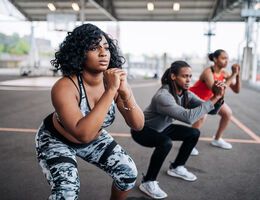
Aug. 24, 2026— You're probably already doing squats in your daily life, whenever you sit down and get up from a couch or a toilet or when you pick something off the floor. But here's why it might be worth your while to include this simple exercise in your regular workouts too.
6 reasons to do squats
- Squats give you lower-body and core strength for everyday activities. Squats strengthen the muscles of your legs, buttocks, lower back and core, according to AARP. Strengthening these muscles may make daily activities easier, including when it comes to things like getting in and out of a chair. Squats and other strength-building exercises are especially helpful as you get older. Learn more about the benefits of muscle-building exercises.
- They help keep you moving through the years. Doing squats and other exercises that strengthen and stretch your body while taking your joints through their full range of motion helps support healthy mobility as you age.
- Squats support pelvic health, which may help with urinary incontinence. Having strong pelvic floor muscles may help control bladder leaks. Squats strengthen the glutes and hamstrings, which support the pelvic floor, according to the National Association for Continence.
- Squats can help protect your joints. Stronger leg muscles help stabilize the hips and the knees, which may reduce the risk of painful problems in those joints.
- They may help improve your balance. And when you have better balance, you may have a lower risk of falling.
- They're free! You don't need to have fancy equipment or go to a gym to do squats.
How to do squats
Basic squats are pretty simple. Here's how to do one:
- Stand with your feet shoulder-width apart. Turn your toes slightly outward.
- Bend your knees, push your hips back and lower your body like you're going to sit in a chair. Try to keep your back straight and your chest out. Your bent knees should not extend beyond your toes.
- Push through your heels to straighten your knees and stand back up.
As you get stronger, you might want to challenge yourself by performing variations on a squat, such as holding dumbbells in each hand.
A good goal might be to work your way up to two sets of 8 to 10 squats a few times a week. Incorporate your squats into your weekly exercise routine, which should include at least 150 minutes of aerobic exercise, such as brisk walking. In addition to squats, try to do other strength-building exercises to work other major muscle groups a couple of times a week.
Consider checking with your doctor
If you haven't exercised in a while or if you have a health condition, it's a good idea to get your doctor's OK before you start. Your doctor or a physical therapist can help answer any questions or concerns you might have about doing squats safely.
Sources
- AARP. 5 Ways to Exercise Your Bones.
- AARP. The #1 Exercise to Do as You Get Older.
- American Council on Exercise. Bodyweight Squat.
- American Council on Exercise. The Surprising Benefits of Performing Daily Mobility Exercises.
- Arthritis Foundation. How to Squat Correctly.
- Centers for Disease Control and Prevention. What Counts as Physical Activity for Adults.
- National Association for Continence. Step 4: Pelvic Floor Exercises.